


Views: 0 Author: Site Editor Publish Time: 2026-02-09 Origin: Site


As sustainability, performance stability, and lifecycle value become central criteria in material selection, durability has emerged as a decisive factor for fiber raw materials. When industry professionals ask whether Lyocell Fiber is durable for long-term use, they are evaluating the intrinsic performance of the fiber itself, not fabrics, garments, or finished products. Durability at the fiber level determines whether a material can maintain its mechanical integrity, dimensional stability, and functional consistency throughout repeated processing, environmental exposure, and extended service life.
Lyocell Fiber is widely recognized as a high-end regenerated cellulose fiber engineered for strength, stability, and sustainability. Its reputation for durability is not accidental; it is the result of carefully selected cellulose raw materials, advanced solvent-spinning technology, and precise fiber engineering. This article focuses exclusively on Lyocell Fiber as a fiber raw material, analyzing its long-term durability from molecular structure, mechanical performance, wet strength behavior, fatigue resistance, and industrial-scale production perspectives.
In fiber science, durability refers to a fiber’s ability to retain its essential properties over time under mechanical, environmental, and chemical stress. For Lyocell Fiber, long-term durability is evaluated through several core indicators:
Tensile strength retention
Resistance to fiber fatigue
Dimensional stability
Wet and dry strength balance
Structural integrity of cellulose chains
Unlike short-term performance metrics, long-term durability assesses how Lyocell Fiber behaves after repeated stress cycles rather than a single load event.
The durability of Lyocell Fiber begins at the molecular level. Lyocell Fiber is composed of long-chain cellulose polymers arranged in a highly ordered structure. This molecular organization plays a decisive role in ensuring long-term performance.
| Structural Feature | Contribution to Durability |
|---|---|
| High degree of polymerization | Enhances tensile strength |
| Strong hydrogen bonding | Improves fatigue resistance |
| High crystallinity | Limits long-term deformation |
| Oriented microfibrils | Ensures structural stability |
Because Lyocell Fiber is produced using a non-derivatizing solvent system, the original cellulose polymer chains remain largely intact. This preservation of molecular length and orientation gives Lyocell Fiber a durability advantage over traditional regenerated cellulose fibers.
Tensile strength is one of the most direct indicators of fiber durability. Lyocell Fiber exhibits high initial tensile strength and, more importantly, strong strength retention over time.
| Fiber Type | Dry Strength | Wet Strength | Long-Term Retention |
|---|---|---|---|
| Lyocell Fiber | High | High | Excellent |
| Viscose fiber | Medium | Low | Poor |
| Modal fiber | Medium–High | Medium | Moderate |
The ability of Lyocell Fiber to retain strength in both dry and wet conditions is essential for long-term durability. Moisture often accelerates degradation in cellulose fibers, but Lyocell Fiber resists this due to its dense hydrogen bonding network.
One of the defining durability advantages of Lyocell Fiber is its high wet strength. Many regenerated fibers experience significant strength loss when exposed to moisture, which leads to fiber damage and reduced lifespan.
Lyocell Fiber, by contrast, maintains a high percentage of its dry strength when wet. This characteristic ensures that repeated moisture exposure does not compromise the fiber’s long-term structural integrity.
Prevents fiber breakage during processing
Reduces internal structural damage
Enhances resistance to long-term fatigue
This balance between dry and wet strength is a cornerstone of Lyocell Fiber durability.
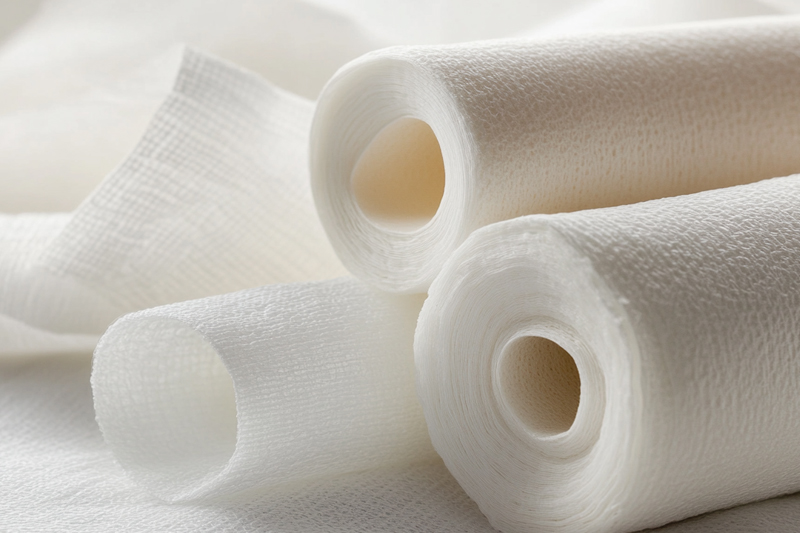
Long-term durability is closely linked to how a fiber responds to repeated mechanical stress. Lyocell Fiber demonstrates strong resistance to fiber fatigue, meaning that it can withstand repeated tension and relaxation cycles without significant performance degradation.
At the fiber level, fatigue resistance is influenced by:
Uniform internal stress distribution
Strong microfibril alignment
Limited molecular slippage
Because Lyocell Fiber has a consistent internal structure, stress is distributed evenly along the fiber length, reducing the risk of micro-cracks or structural collapse over time.
Another important aspect of long-term durability is dimensional stability. Lyocell Fiber exhibits low creep behavior, meaning it does not continue to elongate under constant load over extended periods.
| Fiber | Creep Tendency |
|---|---|
| Lyocell Fiber | Low |
| Viscose fiber | High |
| Synthetic fibers | Variable |
Low creep behavior ensures that Lyocell Fiber maintains its original dimensions and mechanical characteristics even after prolonged stress exposure, reinforcing its suitability for long-term use.
The manufacturing process has a direct impact on fiber durability. Advanced Lyocell Fiber producers utilize a proprietary wet-laid process, which allows precise control over fiber regeneration and alignment.
The wet-laid process contributes to durability by:
Minimizing internal defects
Enhancing cellulose chain orientation
Reducing residual stress
Industrial-scale manufacturers employing this process can achieve exceptional consistency across large production volumes. For instance, a leading producer headquartered in the Peixian Economic Development Zone operates with an annual capacity of 60,000 tons of Lyocell Fiber, applying proprietary engineering technology and the most advanced wet-laid process. This level of process control ensures fiber durability that meets leading domestic and international standards.
Durability is not only mechanical; chemical stability also plays a role. Lyocell Fiber demonstrates strong resistance to chemical degradation due to its high-purity cellulose composition and closed-loop solvent system.
Key chemical durability factors include:
Minimal residual chemicals
Preserved cellulose molecular chains
Reduced oxidation risk
These factors contribute to the long-term reliability of Lyocell Fiber as a raw material.
Durability and sustainability are often seen as competing goals, but Lyocell Fiber successfully integrates both. Its durability extends product life cycles, while its renewable cellulose base supports environmental responsibility.
From an environmental perspective:
Longer fiber lifespan reduces replacement frequency
Stable performance minimizes material waste
Closed-loop production protects cellulose quality
This balance reinforces the long-term value proposition of Lyocell Fiber.
Global trends in material science and sustainable manufacturing continue to elevate the importance of durable fiber raw materials. Lyocell Fiber aligns well with these trends due to:
Increasing demand for long-life materials
Emphasis on lifecycle assessment
Growth in high-performance cellulose fibers
As production technologies advance and capacity expands beyond 50,000 tons annually among leading producers, Lyocell Fiber is becoming a cornerstone of next-generation textile raw materials.
Is Lyocell Fiber considered durable compared to other cellulose fibers?
Yes. Lyocell Fiber demonstrates superior long-term durability due to its high tensile strength, wet strength retention, and stable molecular structure.
Does Lyocell Fiber lose strength over time?
Lyocell Fiber retains its strength well over extended use, showing low fatigue and minimal degradation under repeated stress cycles.
Why does Lyocell Fiber have high wet durability?
The advanced solvent-spinning process preserves cellulose chain integrity, allowing Lyocell Fiber to maintain strength even in wet conditions.
Is Lyocell Fiber suitable for applications requiring long service life?
From a fiber raw material perspective, Lyocell Fiber is well-suited for long-term use due to its structural stability and resistance to deformation.
How does production technology affect Lyocell Fiber durability?
Advanced wet-laid processes and proprietary engineering technologies ensure consistent fiber quality, which directly enhances long-term durability.
By examining durability strictly from the perspective of Lyocell Fiber as a fiber raw material, it becomes clear that Lyocell Fiber is engineered for long-term performance. Its strong molecular structure, balanced wet and dry strength, fatigue resistance, and advanced production technology collectively ensure that Lyocell Fiber remains stable and reliable throughout extended use cycles.


