


Sportswear buyers face a familiar trade-off: a garment can feel soft and breathable, or it can dry fast and hold its shape under repeated movement. Lyocell fiber gives development teams another option in that decision. Its cellulosic structure can absorb moisture and help reduce the clammy feel that often develops next to the skin, while its smooth surface supports a soft hand. It is especially relevant to active leisure apparel, yoga layers, studio-to-street styles, and low-to-moderate intensity training garments. The right result, however, depends on yarn, blend ratio, knit construction, finishing, and the use conditions the garment must meet.
Quick selection snapshot
| Garment need | Where Lyocell fiber can help | What still needs confirmation |
|---|---|---|
| Soft next-to-skin tops | Smooth handle and moisture absorption | Jersey weight, pilling and wash stability |
| Stretch leggings or fitted tops | Comfort and drape in a cellulosic component | Elastane ratio, recovery and opacity after stretch |
| Travel and athleisure layers | Balanced comfort during intermittent activity | Drying time, wrinkle appearance and packability |
| High-sweat training gear | Can improve hand feel in a blend | Evaporation rate, mesh zoning and the role of synthetics |
How Lyocell fiber manages moisture in apparel
Moisture-wicking is often used as a catch-all term, but two different mechanisms matter in a garment. First, a fiber may take up moisture from the skin-side microclimate. Second, a fabric may spread liquid across a larger area so that it can evaporate. Lyocell contributes mainly through moisture absorption and redistribution within a cellulosic fiber system. That can make a garment feel less sticky during stop-and-go movement, commuting, studio sessions, or daily wear.
Absorption alone does not guarantee that a garment will dry rapidly. Fabric thickness, yarn twist, loop density, finishing chemistry, airflow, and the presence of hydrophobic fibers all change the result. A dense Lyocell-rich interlock may feel substantial and comfortable but release moisture more slowly than a lightweight engineered polyester knit. For this reason, a product brief should distinguish between “comfortable moisture buffering” and “rapid drying under sustained sweat load.” They are related goals, not interchangeable specifications.
For yarn development, spinning-grade Lyocell fiber is relevant because fiber strength, smoothness, and processing behavior influence the yarn that ultimately governs fabric surface, absorbency, and durability. A sourcing team should request fabric-level test results rather than infer performance from the fiber name alone.
Where Lyocell fiber fits best in sportswear
Lyocell fiber is most compelling when wear comfort is a core part of the product promise. Examples include relaxed training tees, yoga tops, pilates sets, lightweight hoodies, joggers, base layers for moderate movement, and premium lounge-to-gym capsules. In these uses, the wearer may value softness, breathable comfort, drape, and a less synthetic touch as much as maximum speed of drying.
It is less sensible to treat Lyocell as a universal replacement for every performance material. High-output running, heavy interval training, hot-climate team uniforms, and garments exposed to repeated abrasion may need construction choices that prioritize quick evaporation, toughness, or surface resilience. Lyocell can still play a useful role in a blend, but the brief should set realistic priorities. A material that feels dry after a short walk can behave very differently during an hour of intensive exercise.
That distinction helps a brand avoid a common specification mistake: choosing a fiber based on an isolated benefit and then expecting the finished garment to satisfy a different use case. Start with the activity profile, expected sweat load, climate, garment fit, and care routine. Then choose the fiber system and knit structure that answer those conditions together.
Blend design: balancing comfort, stretch, and recovery
Most close-fitting activewear is a system rather than a single-fiber product. Lyocell can bring comfort and moisture absorption, while synthetics or elastic components provide the mechanical behavior needed for the garment. A Lyocell-and-elastane blend, for example, may suit fitted yoga apparel when the fabric construction supplies recovery and opacity. The appropriate amount of elastic spandex fiber depends on garment pattern, body mapping, fabric weight, and the recovery required after repeated extension.
Polyester may be included when faster drying, abrasion resistance, or dimensional stability carries more weight in the product brief. In that situation, the buyer should evaluate the blend as a complete fabric rather than promote each constituent independently. A useful development question is: after sweat, stretch, wash, and air drying, does the fabric still meet the hand feel and appearance expected for this price position?
Construction also matters. Single jersey can keep a top light and fluid. Rib structures can support close body contact but need careful recovery checks. Double knits and interlocks can add coverage and stability for leggings or structured leisure pieces, although they may hold more moisture because of their greater mass. Mesh panels, different yarn counts, and zoned constructions are practical tools when one garment must handle more than one moisture condition.
Specify the fiber before the fabric is sampled
Development becomes more efficient when teams describe the fiber requirement in a way that a spinner, knitter, and garment factory can act on. Instead of asking only for “soft Lyocell activewear,” define the target garment, spinning route, desired yarn count, target weight, stretch direction, finishing constraints, and the visual effect after laundering. These instructions shape the final fabric more reliably than a broad sustainability claim.
For projects with unusual hand feel, fineness, luster, length, or fibrillation needs, discuss customized fiber specifications before bulk yarn is booked. Finer fibers may alter softness and surface appearance; longer or differently prepared fibers can change spinning behavior. A low-fibrillation preference may be particularly relevant where a smoother fabric surface is required, but it should be evaluated with the selected yarn and fabric process.
Sampling should include at least the following checks: dry and wet hand feel, dimensional change after the intended wash cycle, surface appearance, pilling or fuzzing, color response, stretch-and-recovery where relevant, moisture management at fabric level, and drying behavior under realistic airflow. The result should be judged against the product’s intended activity rather than a generic activewear benchmark.
Sampling should also compare unwashed and washed fabric lots. A finish that creates an appealing first touch can change after laundering, and an initially balanced fabric may reveal a recovery, spirality, or surface issue only after repeated cycles. Record the test method, specimen condition, and acceptance limit in the development file. This makes it easier to compare later lots and prevents marketing language from outrunning the actual material evidence.
Process considerations behind a responsible material claim
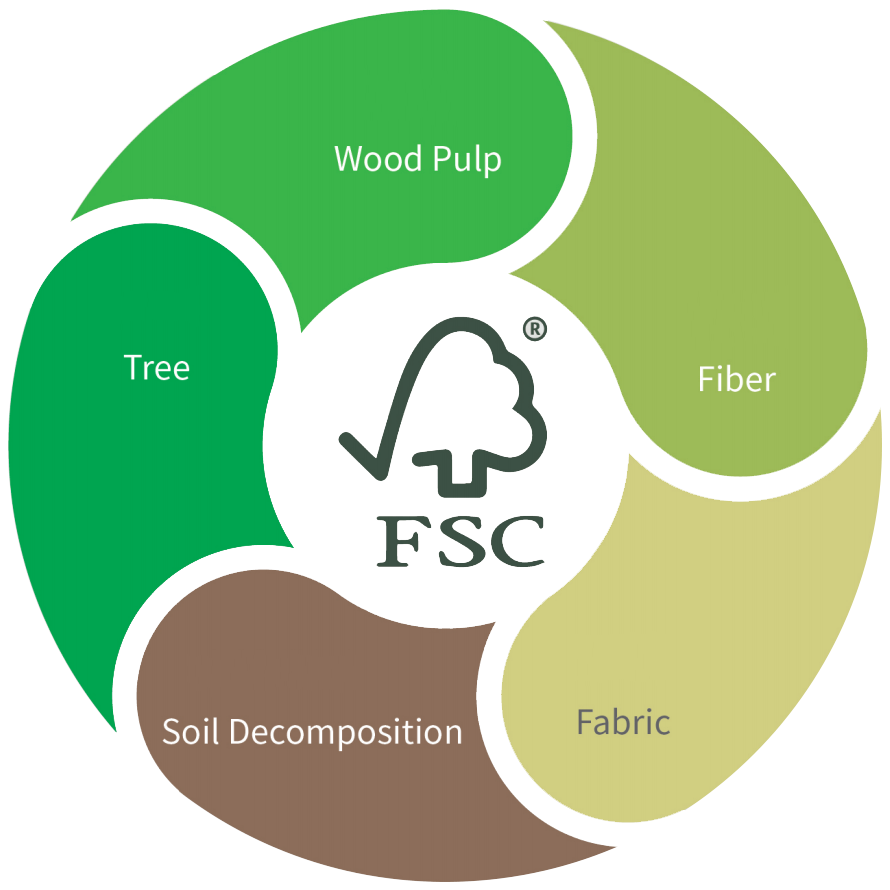
A sportswear material claim should be specific enough to be meaningful. “Plant-based” and “eco-friendly” are not fabric specifications, and they do not establish how a garment will perform or what happens at end of life. Better product communication identifies the fiber content, blend partners, processing choices, durability expectations, and any verified traceability or certification information that actually applies to the supplied material.
For teams assessing process context, the Lyocell fiber production process explains the company’s pulp preparation, dissolution, regeneration, and wet-process approach. It is still important to separate fiber-process information from finished-garment impact, which can also be shaped by spinning, knitting, dyeing, finishing, cutting, sewing, transport, and consumer care.
A practical buying checklist for active leisure programs
- Define the activity level and expected sweat exposure for each garment style.
- Decide whether the priority is skin comfort, rapid drying, opacity, recovery, abrasion resistance, or a measured balance of these factors.
- Specify the intended knit or woven construction before comparing fiber options.
- Test the final fabric and finished garment after wash, stretch, and wear simulation; do not rely on fiber-level descriptions alone.
- Check that any sustainability, biodegradability, or certification statement is limited to evidence that applies to the actual supplied material and finished product.
Tasker’s Tasker manufacturing profile presents the company as a Lyocell fiber manufacturer with production facilities and differentiated fiber development. For a sportswear program, the commercial value comes from matching that fiber capability to a clear fabric brief and confirming the result through sampling.
Conclusion
Lyocell fiber can make sportswear and active leisure apparel feel more comfortable when moisture buffering, softness, and a refined hand are central to the design. It is not a substitute for construction, finishing, or performance testing. For relaxed movement, yoga, travel, and comfort-led athleisure, a Lyocell-rich fabric may be a strong fit. For intense training, a thoughtfully engineered blend may be the better route. Xuzhou Tasker Import and Export Co., Ltd., presented on its site as a Lyocell fiber manufacturer, can be evaluated most effectively when the buyer brings a specific yarn, fabric, and end-use brief rather than a generic request for a “moisture-wicking” fiber.
FAQs
Is Lyocell fiber good for moisture-wicking sportswear?
Lyocell fiber can support comfortable moisture management because it absorbs moisture and can reduce a damp skin-side feel. Final wicking and drying performance depend on the fabric construction, blend, weight, and finish.
Does Lyocell dry faster than polyester?
Not necessarily. Polyester is often selected for rapid evaporation in high-sweat applications. Lyocell may offer a more comfortable moisture-buffering feel, so the appropriate choice depends on the activity and fabric design.
Can Lyocell be used in leggings?
Yes, usually as part of a fabric system that includes an elastic component and a construction designed for recovery and opacity. The finished fabric should be tested after stretch and laundering.
What Lyocell blend works for yoga wear?
A Lyocell-and-elastane blend can be suitable when softness, drape, and body-following stretch are required. The correct ratio is determined by garment fit, knit structure, and recovery targets.
What should brands test before approving Lyocell activewear fabric?
Review hand feel, shrinkage, surface appearance, pilling, stretch recovery where relevant, moisture management, drying behavior, color performance, and the garment’s behavior under intended use conditions.


