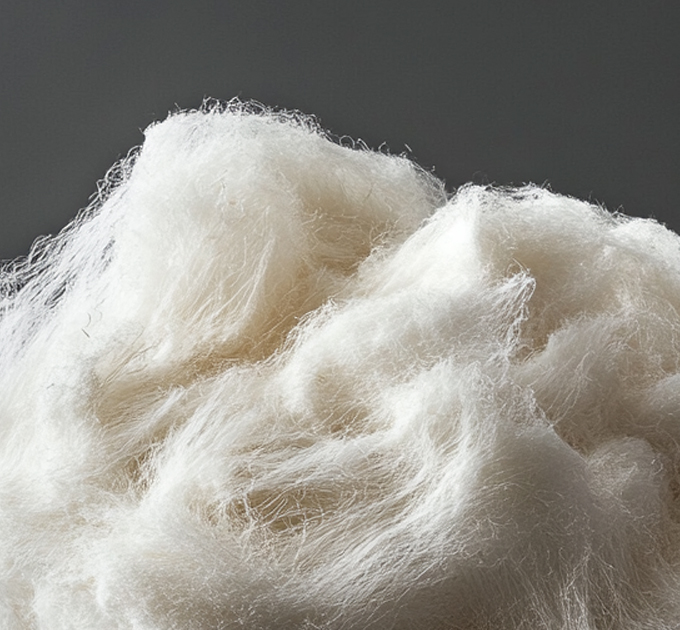
Viscose fiber, also known as artificial cotton or viscose, is made from natural cellulose (such as wood, cotton linters, reeds, and sugarcane bagasse) through a chemical process that dissolves, spins, and regenerates the cellulose. Combining the comfort of natural fibers with the processing advantages of chemical fibers, it is a widely used basic fiber in the textile industry. Viscose fiber is essentially a combination of "natural raw materials + chemical regeneration." Its core components are the same as those of natural cellulose fibers like cotton and linen, retaining the skin-friendly and breathable properties of cellulose fibers. Furthermore, through process adjustments, it can be developed into various sub-categories with different characteristics.
Advantages of viscose fiber: Excellent moisture absorption and breathability Soft feel and natural luster Good dyeability and color fastness Biodegradability
Product Features And Advantages
Natural Cellulose (Such As Wood Pulp Or Cotton Pulp) Soaked In Alkali Solution Produces Alkali Cellulose Reacts With Carbon Disulfide To Produce Cellulose Xanthate Dissolved In Dilute Alkali Solution To Form Viscose (Hence The Name) Filtered And Aged Sprayed Through Spinnerets Into An Acid Bath Coagulated And Regenerated Into Cellulose Fibers Processed Into Yarn.
Application Field
Apparel
Apparel
Medical Textiles
Medical Textiles
Home Textiles
Home Textiles
In the era of carbon neutrality, we utilize natural wood pulp as theprimary raw material and integrate science and technology intofiber production. Each Lyocell Fiber represents a commitment toenvironmental sustainability.