


Views: 0 Author: Site Editor Publish Time: 2026-02-09 Origin: Site


When engineers, material scientists, and textile raw-material buyers ask whether Lyocell Fiber shrinks or stretches easily, they are not asking about garments, fabrics, or end-use performance. They are asking a fiber-level question: how stable is Lyocell Fiber as a regenerated cellulose raw material when exposed to mechanical force, moisture, and long-term use conditions. This distinction matters, because shrinkage and stretch originate first at the fiber structure level, long before any fabric construction or finishing process takes place.
Lyocell Fiber has gained global attention as a high-performance regenerated cellulose fiber due to its balanced mechanical properties, molecular stability, and environmentally responsible production technology. Understanding whether Lyocell Fiber shrinks or stretches easily requires a deep look into its cellulose molecular arrangement, microfibril orientation, wet strength behavior, and engineering process. This article focuses entirely on Lyocell Fiber as a fiber raw material, avoiding fabric-level or garment-level discussion, and instead analyzing shrinkage and stretch from a scientific, industrial, and comparative fiber perspective.
Shrinkage and stretch are often misunderstood because they are frequently discussed in the context of finished products. However, at the raw material stage, shrinkage and stretch describe how Lyocell Fiber behaves when exposed to tension, relaxation, and moisture interaction.
At the fiber level:
Stretch refers to elongation under tensile stress.
Shrinkage refers to dimensional recovery or contraction after stress or moisture exposure.
For Lyocell Fiber, both behaviors are governed by cellulose chemistry and fiber engineering rather than surface treatments or post-processing.
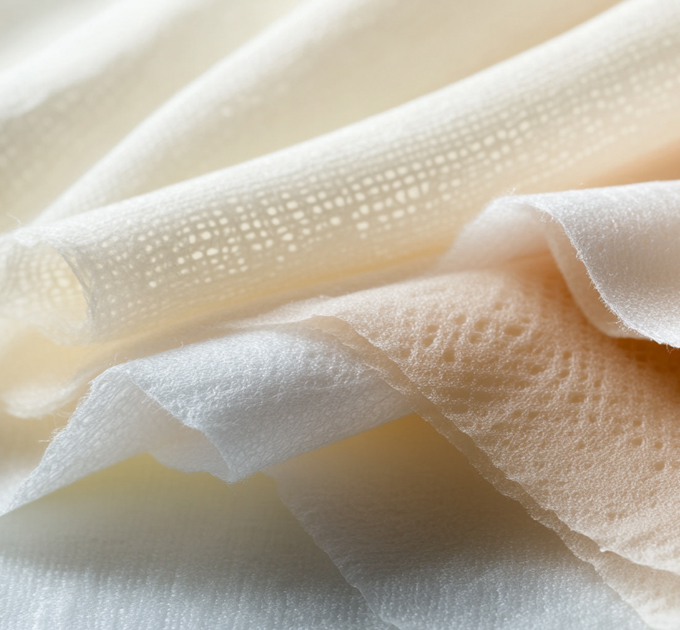
The reason Lyocell Fiber demonstrates controlled shrinkage and limited stretch lies in its molecular structure. Lyocell Fiber is composed of long, linear cellulose chains arranged in a highly oriented and crystalline structure.
| Structural Factor | Influence on Shrinkage and Stretch |
|---|---|
| High crystallinity | Limits excessive elongation |
| Strong hydrogen bonding | Enhances dimensional recovery |
| Oriented microfibrils | Improves tensile stability |
| Uniform fiber morphology | Reduces internal stress variation |
Unlike older regenerated fibers, Lyocell Fiber retains a large portion of the native cellulose polymer integrity. This gives Lyocell Fiber a stronger internal network, allowing it to resist uncontrolled deformation.
From a fiber mechanics standpoint, Lyocell Fiber does not stretch easily compared to many other regenerated cellulose fibers. Its elongation at break is moderate and well-balanced.
| Fiber Type | Typical Elongation at Break |
|---|---|
| Lyocell Fiber | Moderate, controlled |
| Viscose fiber | Higher, less controlled |
| Modal fiber | Moderate |
| Synthetic fibers | Varies widely |
The controlled stretch behavior of Lyocell Fiber is a result of its production process, which aligns cellulose chains during spinning. This alignment limits excessive elongation while maintaining flexibility at the fiber level.
Importantly, Lyocell Fiber exhibits elastic recovery after tension release, meaning that it can return close to its original length without permanent deformation.
Moisture interaction is critical when evaluating Lyocell Fiber. As a cellulose-based fiber, Lyocell Fiber naturally absorbs moisture. However, moisture absorption does not automatically mean uncontrolled shrinkage.
Water molecules form hydrogen bonds with cellulose
Fiber swells slightly at the molecular level
Strong internal bonding limits excessive contraction
Because Lyocell Fiber has high wet strength, its dimensional stability remains strong even in moist conditions. This distinguishes Lyocell Fiber from traditional regenerated fibers that lose structural integrity when wet.
Wet strength is one of the defining advantages of Lyocell Fiber. Many regenerated cellulose fibers weaken significantly in wet conditions, increasing the risk of shrinkage or distortion. Lyocell Fiber, by contrast, retains a large percentage of its dry strength when wet.
| Fiber | Wet Strength Retention |
|---|---|
| Lyocell Fiber | High |
| Viscose fiber | Low |
| Modal fiber | Medium |
This high wet strength ensures that Lyocell Fiber maintains dimensional stability even when exposed to repeated moisture cycles at the fiber level.
One of the most important factors affecting shrinkage and stretch is how Lyocell Fiber is produced. Advanced manufacturers utilize a proprietary wet-laid process, which plays a critical role in fiber stability.
The wet-laid process allows:
Precise control of fiber orientation
Uniform regeneration of cellulose
Reduced internal stress points
Some leading producers operate large-scale facilities using this advanced wet-laid process, achieving annual production capacities exceeding 50,000 tons. For example, a company headquartered in the Peixian Economic Development Zone applies proprietary Lyocell Fiber engineering technology and produces up to 60,000 tons annually, ensuring consistent fiber stability that meets leading domestic and international standards. This industrial-scale engineering is a key reason modern Lyocell Fiber demonstrates controlled shrinkage and stretch behavior.
To better understand shrinkage and stretch, it is helpful to compare Lyocell Fiber with other cellulose-based fibers at the raw material level.
| Fiber Type | Shrinkage Tendency | Stretch Behavior | Structural Stability |
|---|---|---|---|
| Lyocell Fiber | Low | Controlled | High |
| Viscose fiber | Higher | Less controlled | Lower |
| Modal fiber | Medium | Moderate | Medium |
This comparison highlights why Lyocell Fiber is often selected for applications requiring reliable dimensional control at the fiber level.
Shrinkage and stretch are not only short-term phenomena. Long-term dimensional stability is equally important. Lyocell Fiber demonstrates excellent resistance to fiber fatigue, meaning that repeated stress cycles do not significantly degrade its structure.
Long-term stability factors include:
Strong cellulose chain alignment
Low creep behavior
Resistance to microfibril slippage
As a result, Lyocell Fiber maintains consistent performance throughout its lifecycle as a raw material.
The environmentally responsible production of Lyocell Fiber also contributes to its stability. The closed-loop solvent system minimizes chemical damage to cellulose chains, preserving molecular length and strength.
Key engineering advantages include:
Minimal cellulose degradation
High solvent recovery efficiency
Consistent fiber quality across batches
This engineering approach supports both sustainability goals and dimensional reliability.
Current industry trends focus on enhancing Lyocell Fiber stability even further through:
Improved cellulose raw material selection
Advanced spinneret design
Higher precision wet-laid regeneration
Digital process monitoring
As production scales continue to increase globally, Lyocell Fiber is evolving toward even tighter control of shrinkage and stretch at the fiber level.
Does Lyocell Fiber stretch more than other regenerated fibers?
No. Lyocell Fiber generally exhibits controlled, moderate elongation and better elastic recovery compared to traditional regenerated fibers.
Is Lyocell Fiber prone to shrinkage?
At the fiber level, Lyocell Fiber shows low shrinkage tendency due to its strong internal cellulose structure and high wet strength.
How does moisture affect Lyocell Fiber?
Moisture causes limited swelling at the molecular level, but Lyocell Fiber maintains dimensional stability due to strong hydrogen bonding.
Why is Lyocell Fiber more stable than viscose fiber?
Lyocell Fiber uses a non-derivatizing solvent system and advanced wet-laid engineering, preserving cellulose integrity and reducing deformation.
Is Lyocell Fiber suitable for long-term use?
Yes. Lyocell Fiber demonstrates excellent long-term structural stability, making it a reliable regenerated cellulose raw material.
By examining shrinkage and stretch strictly from the perspective of Lyocell Fiber as a fiber raw material, it becomes clear that Lyocell Fiber is engineered for dimensional control, mechanical balance, and long-term stability. Its advanced production technology, strong cellulose molecular structure, and wet-strength performance explain why Lyocell Fiber does not shrink or stretch easily when evaluated at the fiber level.


