


Views: 0 Author: Site Editor Publish Time: 2025-12-16 Origin: Site


The modern textile industry is currently witnessing a significant shift away from thirsty natural fibers and polluting synthetics. At the center of this evolution stands Lyocell, a semi-synthetic fiber that effectively bridges the gap between the luxury of silk and the durability of polyester. Technically defined as a "third-generation" rayon, it is derived from wood cellulose—typically harvested from eucalyptus, birch, or oak trees. Unlike its predecessors, however, it addresses the critical environmental toxicity issues associated with traditional viscose production.
Why is this material surging in popularity right now? The market is demanding "Sustainable Luxury." Brands and consumers alike want materials that deliver high performance without the massive ecological footprint of conventional cotton or the microplastic crisis driven by petroleum-based synthetics. However, navigating the claims around this fabric can be complex. This guide provides a technical and commercial evaluation of lyocell fiber, covering production realities, comparative performance, and the transparency required in its supply chain.
Closed-Loop Efficiency: Lyocell production recovers 99%+ of the NMMO solvent used, making it significantly cleaner than Viscose Rayon.
Performance Profile: It is 50% more absorbent than cotton, naturally breathable, and possesses a unique "peach-fuzz" texture through fibrillation.
Cost Reality: Expect a 50–70% price premium over standard cotton (e.g., ~$25/m vs. ~$15/m) driven by advanced technology costs, not just branding.
Sustainability Nuance: True sustainability depends on the wood source (FSC/PEFC certification); "Generic Lyocell" may lack the strict environmental audits of branded one.
Supply Chain: Production is dominated by manufacturers in China and India; origin impacts price and certification levels.
To understand the value of this material, you must first understand the chemistry that sets it apart from earlier cellulosic fibers. While Viscose Rayon was the industry standard for decades, it relied on a chemical alteration method involving carbon disulfide—a toxic compound notorious for harmful emissions.
Lyocell utilizes a Direct Solvent Method. This is a game-changer in fiber engineering. Instead of chemically changing the cellulose structure to break it down, manufacturers use Amine Oxide (NMMO). This is a non-toxic organic solvent that physically dissolves wood pulp. Think of it like dissolving sugar in water; the sugar remains sugar, just in a liquid state. This preserves the structural integrity of the cellulose, resulting in a stronger fiber.
This distinct method is often referred to as the Closed-Loop System. It is the gold standard for eco-conscious manufacturing because it prevents chemicals from leaking into the biosphere.
The Lyocell Production Process follows a rigorous cycle designed for efficiency and minimal waste:
Chipping & Pulping: The process begins with hardwood logs, such as eucalyptus or oak. These are chipped into small pieces and dissolved in a heated, pressurized bath of NMMO.
Spinning: Once dissolved, the thick, honey-like solution is forced through spinnerets. These devices function much like a showerhead, extruding the solution to create long, continuous filament fibers.
Washing & Recovery: The newly formed fibers enter a bath of demineralized water. As the solvent is washed away, the cellulose hardens into fiber. Crucially, 99.5% to 99.8% of the NMMO solvent is recovered from this water, purified, and reused in the next batch.
Finishing: Finally, the fibers are dried and lubricated with soap or silicone to facilitate weaving. They are crimped to add bulk and then cut to the desired length for spinning into yarn.
The speed of this operation is remarkable compared to natural fibers. Raw wood pulp can be converted into baled fiber in approximately two hours. Furthermore, the philosophy here is "zero-waste." Unlike the sulfur-heavy emissions and wastewater issues associated with viscose, lyocell byproducts are minimal, significantly reducing the environmental burden of textile manufacturing.
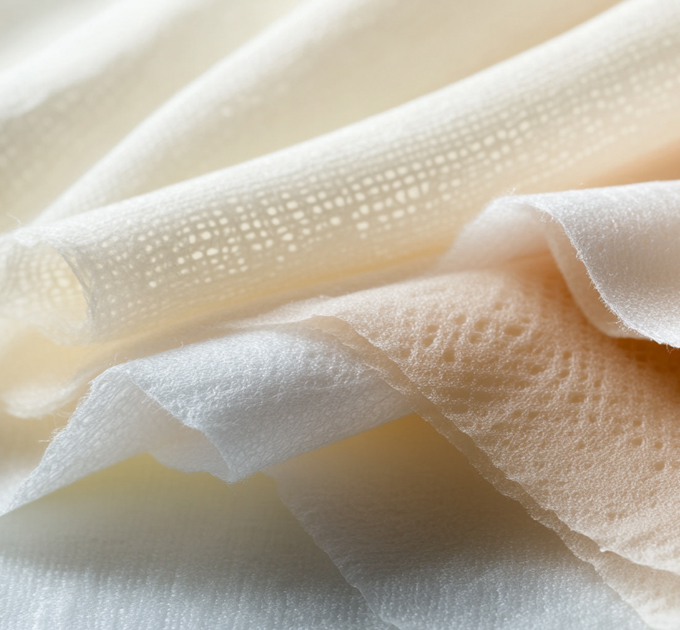
Beyond its green credentials, Lyocell commands a higher price point because it performs exceptionally well. It is not just an eco-alternative; it is often a technical upgrade over traditional natural fibers.
One of the most distinct advantages is the material's Breathable Fabric Property. The fiber structure is hydrophilic, meaning it loves water. Unlike polyester, which acts as a plastic barrier trapping heat and sweat against the skin, Lyocell actively transports moisture into the fiber core.
This high wickability creates a tangible cooling effect. As moisture evaporates from the fiber rather than sitting on the skin, it regulates body temperature effectively. This makes the fabric ideal for high-end bedding, sleepwear, and summer apparel where thermal regulation is critical.
When you touch a Lyocell garment, you notice a specific "soft drape" and a smooth, cool surface. This unique texture is often achieved through a phenomenon called Fibrillation. During the processing, the main fiber can split into microscopic "hairs" on the surface.
If controlled correctly during finishing, these micro-fibrils create a soft, suede-like texture often described as "peach skin." However, manufacturers must manage this carefully. Uncontrolled fibrillation can lead to pilling, so specific enzymes are often used during the finishing stage to polish the surface and prevent fuzziness.
Because the fiber manages moisture so effectively, it naturally inhibits bacterial growth. Bacteria thrive in damp, stagnant environments (like sweaty polyester). By absorbing moisture rapidly, Lyocell removes the medium bacteria need to replicate. This occurs without the addition of chemical anti-microbial agents.
Furthermore, the surface of the fiber is smooth under a microscope. Contrast this with wool or cotton, which have jagged scales or irregular surfaces. This smoothness makes Lyocell hypoallergenic and highly suitable for people with sensitive skin or conditions like eczema.
Durability is often the weak point of semi-synthetics, but Lyocell breaks this mold.
Wet vs. Dry Strength: Viscose rayon becomes fragile and easy to tear when wet. Lyocell, however, retains high tensile strength even when wet, making it safer to wash.
Dimensional Stability: While it can shrink, the rate is moderate—typically around 3% during the first wash. This is superior to cheap cotton knits, though it still requires proper care (cold wash, air dry) to maintain its shape over years of use.
For buyers and designers, choosing a material is always a trade-off between cost, performance, and impact. The following comparisons help clarify where Lyocell fits in the textile hierarchy.
| Feature | Lyocell | Cotton | Viscose/Rayon | Polyester |
|---|---|---|---|---|
| Primary Origin | Wood Pulp (Eucalyptus) | Cotton Plant | Wood Pulp / Bamboo | Petroleum |
| Breathability | Excellent | Good | Good | Poor |
| Moisture Wicking | High | Moderate | High | Low (Traps Sweat) |
| Durability | High (Wet & Dry) | Medium | Low (Weak when wet) | Very High |
| Eco-Impact | Low (Closed Loop) | High (Water/Pesticides) | High (Chemical Waste) | High (Microplastics) |
Sustainability: Lyocell is the clear winner here. It utilizes 20–50% less water than cotton cultivation. Furthermore, the yield per acre for eucalyptus trees is significantly higher, requiring only 1/5th of the land area needed for an equivalent amount of cotton fiber.
Feel: Lyocell feels smoother, cooler, and heavier in its drape. Cotton tends to be crisper, warmer, and becomes softer only after repeated breaking in. Ultimately, Lyocell wins on eco-metrics and immediate softness, while cotton wins on raw affordability and widespread accessibility.
Process: The distinction here is chemical versus physical. Viscose production involves a chemical change using toxic Carbon Disulfide (CS2). Lyocell uses a physical change via a solvent.
Durability: Lyocell is technically stronger. Viscose is notorious for tearing or losing shape when wet. Lyocell is the technically superior successor, fixing the structural weaknesses of the older rayon generation.
Origin: This is a battle between wood pulp and petroleum.
Breathability: Lyocell breathes; polyester suffocates. While polyester is unbeatable for waterproofing or extreme abrasion resistance, it traps odors and sweat. For next-to-skin comfort, Lyocell is superior. Polyester should be reserved for outerwear or performance gear where durability is the only priority.
Understanding the origin of the fiber is crucial for verifying quality and sustainability claims. Not all Lyocell is created equal.
China & India: These nations are major volume producers. They offer "Generic Lyocell" at significantly lower price points. While the chemical structure of the fiber is identical, the environmental controls at the factory level can vary.
USA: There is niche production in the United States, primarily focused on specialized sustainable textiles, though the volume is lower compared to Asian and European hubs.
When sourcing, you will encounter two main categories:
Branded products: Buying branded products guarantees that the wood sourcing is sustainable (certified by FSC/PEFC) and that the production process is a verified closed-loop system.
Generic Lyocell: This is chemically identical to the branded version. However, it may lack transparency regarding the wood source. There is a risk that generic lyocell is derived from ancient or endangered forests, or that the factory does not recover the solvent.
To ensure you are buying a verified Sustainable Textile Material, look for these certifications:
EU Ecolabel: recognizes products with a reduced environmental impact.
OEKO-TEX® Standard 100 Class I: ensures the final fiber is free from harmful solvent residues.
Canopy "Dark Green Shirt" Rating: ranks producers on their commitment to protecting ancient and endangered forests.
Adopting Lyocell requires a budget adjustment. It is a premium material, and understanding the "why" behind the cost is essential for justification.
You should expect a higher upfront cost. Yardage for Lyocell generally runs $25+ per meter, whereas premium cotton might sit in the $15–17 range. This price is driven by high technology costs. The NMMO solvent recovery systems are expensive to build and maintain. Additionally, if you choose branded fibers like TASKER, you are paying royalty fees for the marketing and certification backing.
Despite the initial sticker shock, the Total Cost of Ownership can be favorable.
Longevity: Due to its higher wet strength, Lyocell items tend to last longer than standard viscose, requiring fewer replacements over time.
Care Costs: The fabric dries incredibly fast. This translates to energy savings if using a dryer, though air drying is recommended. It also washes well at lower temperatures, reducing utility usage.
There are practical risks to consider before investment:
Wrinkling: This fabric does wrinkle. It is not "iron-free." Consumers must be willing to steam their garments or accept a "relaxed," natural look.
Heat Sensitivity: High heat is the enemy of Lyocell. Ironing at high temperatures can scorch or glaze the fibers, ruining the peach-fuzz texture. Care labels must be strictly followed to protect the investment.
Lyocell represents a verified Sustainable Textile Material that delivers tangible performance benefits rather than just eco-marketing. It effectively combines the breathability and hygiene of natural fibers with the durability and manufacturing precision of synthetics. While the upfront cost is higher, the investment is justified by the fabric's longevity, comfort, and minimal environmental footprint.
Buying Recommendation:
For Brands: Sourcing branded fiber (like Tasker) is crucial. It validates your sustainability claims and protects you from greenwashing accusations associated with opaque supply chains.
For Consumers: The premium price pays off most in bedding and intimates. These are areas where moisture management and skin sensitivity are paramount, and where the unique properties of Lyocell shine the brightest.
Future Outlook: As patents expire and production capabilities scale up in Asia, the price gap between Lyocell and cotton is expected to narrow. In the near future, we expect Lyocell to move from a luxury niche to the standard baseline for mid-to-high-end textiles.
A: Yes. It is highly hydrophilic (water-loving) and breathable. It wicks sweat away from the body significantly better than cotton, creating a cooling effect that makes it excellent for summer apparel and warm-weather bedding.
A: It has low shrinkage compared to other cellulosics, typically around 3% during the first wash. To maintain the original dimensions, cold washing and air drying are highly recommended.
A: Pure Lyocell has low elasticity. It is strong and durable but does not stretch naturally. It is often blended with Elastane (Spandex) to add the necessary stretch for activewear or fitted garments.
A: No. It is highly absorbent. While it manages moisture well by wicking it away from the skin, it does not repel water like synthetic nylon or polyester.


